
Hyderabad · West
Tellapur
Hyderabad’s Expanding Residential Growth Corridor
A large-scale residential market connecting West Hyderabad’s employment districts with the emerging Kollur–Osman Nagar growth belt.
Our view on Tellapur.
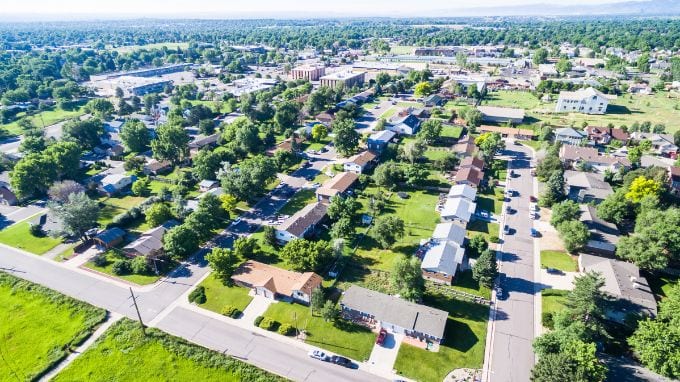
Tellapur has evolved from a peripheral residential location into one of the most important large-scale housing markets in western Hyderabad.
Its growth is closely linked to the expansion of the Financial District, Gachibowli and the wider western employment corridor.
At the same time, Tellapur occupies an important geographic position between established western Hyderabad and the rapidly developing areas toward Kollur, Osman Nagar and the ORR.
This gives Tellapur a distinctive market character:
Employment proximity + large development capacity + established residential demand + expanding urban infrastructure
Unlike premium Kokapet, where land economics have become exceptionally high, Tellapur continues to offer a broader range of residential development opportunities.
For WENS, the important question is therefore not simply whether Tellapur will grow.
It is:
Which parts of Tellapur will mature first, what infrastructure will support that growth, and which assets can remain competitive as supply expands?
Why Tellapur Matters
Tellapur is strategically positioned within the western Hyderabad growth system.
The market benefits from its proximity to:
Financial District
Gachibowli
Nanakramguda
Nallagandla
Lingampally
Kokapet
Kollur
ORR
This location allows Tellapur to function as both:
a residential destination for the existing employment corridor
and
a transition zone toward Hyderabad's western expansion belt.
The market's scale is one of its greatest advantages.
Large parcels and extensive residential development have allowed multiple projects to enter the market, creating a much deeper housing ecosystem than many emerging peripheral locations.
The West Hyderabad Connection
Tellapur should not be analysed in isolation.
Its real-estate trajectory is part of a much larger western Hyderabad development system.
Established Economic Core
Financial District
Gachibowli
Nanakramguda
↓
Transitioning Residential Belt
Nallagandla
Tellapur
↓
Emerging Western Growth
Kollur
Osman Nagar
Mokila
This geographic relationship is important.
As development expands westward, Tellapur increasingly acts as a bridge between established employment centres and the next generation of residential development.
Connectivity
ORR Access
The Outer Ring Road is one of Tellapur's most important regional connectivity assets.
It provides access toward:
Gachibowli
Financial District
Kokapet
Nanakramguda
Airport
Shamshabad
Northern and eastern Hyderabad
However, ORR proximity varies significantly by individual project and parcel.
WENS therefore evaluates actual road connectivity, rather than treating an entire locality as equally connected.
Internal Road Network
Tellapur's internal connectivity has historically developed alongside residential expansion.
As population density increases, local roads, junction capacity, drainage and utility infrastructure become increasingly important.
This is a critical transition for the market.
A locality can have excellent regional connectivity while still experiencing local infrastructure pressure.
WENS therefore separates:
regional accessibility
from
local infrastructure capacity.
Employment & Demand
The underlying residential demand in Tellapur is strongly connected to West Hyderabad's employment ecosystem.
The Financial District and Gachibowli employment clusters provide a large pool of potential residents.
This creates demand from:
IT and technology professionals
Corporate employees
Senior professionals
Business families
Investors
NRIs
First-time premium-home buyers
Tellapur also benefits from its relative positioning against the more expensive core of the western corridor.
This creates an important affordability relationship:
Kokapet / Financial District → premium core
Tellapur → larger residential growth market
Kollur / Osman Nagar → emerging western expansion
This relationship is likely to remain important as the western corridor develops.
Residential Market
Residential development is the dominant real-estate activity in Tellapur.
The market contains a broad range of:
Large apartment communities
Premium apartments
Mid-to-upper-premium housing
Villas
Residential plots
Gated communities
Large-format developments are particularly important because they can materially influence local supply, absorption and future population density.
This creates both an opportunity and a risk.
The Opportunity
Tellapur has the scale to develop into a substantial residential urban district.
The Risk
Large volumes of competing inventory can reduce the scarcity premium associated with individual projects.
Therefore, project selection matters significantly more than locality selection alone.
Land Market
Tellapur still has a meaningful land-development component, although development pressure is steadily increasing.
Land opportunities should be assessed according to:
Exact location
Road frontage
Parcel size
Title
Encumbrances
Survey status
Land-use classification
Zoning
Layout status
Access
Development permissions
Surrounding development
Infrastructure availability
A parcel described simply as “Tellapur land” is not sufficiently defined for investment analysis.
Two parcels within the broader Tellapur market can have materially different development potential.
Development Character
Tellapur is increasingly becoming a planned residential expansion district rather than a speculative peripheral settlement.
The dominant development pattern is:
Large residential projects → supporting retail/services → increasing population → infrastructure expansion → gradual urban consolidation
This process creates a different investment environment from an undeveloped land corridor.
As more projects become occupied, the market's economics increasingly depend on:
Actual population
Schools
Retail
Healthcare
Restaurants
Daily services
Public transport
Road capacity
Water and drainage
Employment accessibility
The market is therefore moving from a development story toward an urbanisation story.
Supply & Competition
Tellapur has substantial residential competition.
This means buyers and investors have multiple alternatives across:
Tellapur
Nallagandla
Kollur
Osman Nagar
Gopanapalli
Lingampally
Mokila
As the market matures, the best-performing projects are likely to be differentiated by more than location.
Important factors include:
Developer execution
Construction quality
Project scale
Community amenities
Possession certainty
Unit configuration
Maintenance quality
Rental demand
Resale liquidity
Price relative to competing projects
For WENS, supply analysis is therefore an essential component of Tellapur opportunity evaluation.
Rental & End-User Demand
Tellapur's proximity to major employment centres gives it a meaningful end-user and rental-demand base.
However, rental performance can vary substantially between projects.
Projects closer to major employment routes and established services may have a different demand profile from developments deeper inside the growth corridor.
WENS therefore evaluates rental demand at the project and micro-market level, rather than applying a single rental assumption across Tellapur.
Infrastructure Status
Operational
Outer Ring Road
The ORR provides established regional connectivity to the wider Hyderabad metropolitan area.
Existing western employment infrastructure
Financial District, Gachibowli and surrounding employment clusters are already operational economic centres supporting residential demand.
Developing
Local road and urban infrastructure
Ongoing residential growth continues to increase requirements for roads, drainage, utilities, public services and local mobility.
Future / Potential
Future public-transport improvements and western-corridor infrastructure may strengthen Tellapur's connectivity.
However, WENS does not treat proposed infrastructure as an existing asset.
Any future transport project should be assessed according to:
announcement → approval → funding → tender → construction → commissioning
rather than simply being included in a marketing narrative.
What WENS Is Watching
1. Residential absorption
How much of the large pipeline is actually being absorbed?
2. Population conversion
Are sold units translating into occupied homes and functioning neighbourhoods?
3. Infrastructure capacity
Can local infrastructure keep pace with increasing density?
4. Employment accessibility
How easily can residents reach the Financial District and Gachibowli employment belt?
5. Competitive supply
How much new inventory is entering Tellapur and neighbouring markets?
6. Land conversion
How quickly are remaining development parcels being converted into residential projects?
7. Public transport
Improved mass transit could materially influence long-term urbanisation and commuting patterns.
8. Project-level differentiation
Which developments are building genuine end-user communities rather than simply adding inventory?
Key Risks
Tellapur has strong structural drivers, but it is not a risk-free market.
Investors and buyers should consider:
High residential supply
Competition from Kollur and neighbouring markets
Project-specific execution risk
Infrastructure catching up with development
Traffic and local road capacity
Water and drainage requirements
Potential differences between advertised and realised prices
Long development timelines for peripheral parcels
Rental-demand variation between projects
Resale liquidity
Over-reliance on future infrastructure announcements
The central risk is not lack of development.
It is the possibility of too much similar development competing for the same buyer pool.
Land Due Diligence
Before acquiring land in Tellapur, WENS recommends verifying:
Complete title chain
Encumbrance certificate
Survey and subdivision records
Land-use classification
Master-plan zoning
Road access
Width and legal status of access roads
Layout approval
Development permissions
Government reservations
Acquisition implications
Utility corridors
Existing occupation
Litigation
Environmental or development restrictions
Actual development potential
In an expanding urban corridor, the development potential of land can be more important than its current appearance.
WENS Market View
Tellapur is becoming a city district, not simply a plotted-development corridor.
Its fundamental strength comes from its position between Hyderabad's established western employment centres and the next phase of western expansion.
The Financial District and Gachibowli provide the economic engine.
Tellapur provides the residential scale.
Kollur and Osman Nagar extend the growth frontier further west.
This creates a powerful metropolitan development relationship.
But Tellapur's next phase will require more than new buildings.
The market must convert development into functioning urbanisation.
That means:
homes → residents → services → infrastructure → employment connectivity → sustainable demand.
For investors, the opportunity is therefore selective.
The strongest opportunities are likely to be those where location, development quality, entry price and long-term demand remain aligned.
- Market Type
- Residential Growth Corridor
- Development Stage
- Established Growth / Urbanising
- Primary Driver
- Western Employment Corridor
- Secondary Driver
- ORR + Westward Urban Expansion
- Dominant Asset
- Large Residential Communities
- Land Opportunity
- Selective
- Residential Opportunity
- Strong, but supply-sensitive
- Speculative Risk
- Moderate
- WENS Outlook
- Positive with disciplined project and land selection
A large-scale residential growth market positioned between West Hyderabad's established employment core and its expanding western frontier.
Market conditions, infrastructure, development activity, supply and property values change over time.
WENS market views are research and intelligence-based assessments and should not be interpreted as guarantees of future returns.
Property-specific decisions should be supported by independent legal, technical, financial and regulatory due diligence.
Infrastructure has been classified separately as operational, developing, approved/planned or future/potential wherever relevant.
Last reviewed: September 2026
Thinking about Tellapur?
We will tell you what has transacted there recently and what we would pay today.